Gender Masculine
Usage English, French, German, Polish, Dutch, Swedish, Norwegian, Danish, Czech, Slovak, Russian, Ukrainian, Croatian, Serbian, Macedonian, Romanian, Catalan, Greek, Hebrew, Arabic, Georgian, Biblical, Biblical Latin, Biblical Greek, Biblical Hebrew
Meaning & History
This is the Hebrew word for "man". It could be ultimately derived from Hebrew אדם ('adam) meaning "to be red", referring to the ruddy colour of human skin, or from Akkadian adamu meaning "to make".According to Genesis in the Old Testament Adam was created from the earth by God (there is a word play on Hebrew אֲדָמָה ('adamah) meaning "earth"). He and Eve were supposedly the first humans, living happily in the Garden of Eden until they ate the forbidden fruit from the tree of knowledge of good and evil. As a result they were expelled from Eden to the lands to the east, where they gave birth to the second generation, including Cain, Abel and Seth.As an English Christian name, Adam has been common since the Middle Ages, and it received a boost after the Protestant Reformation. A famous bearer was Scottish economist Adam Smith (1723-1790).
Related Names
Feminine FormAdamina(English)
Other Languages & CulturesAdem(Albanian) Adem(Bosnian) Aatami(Finnish) Akamu(Hawaiian) Ádám(Hungarian) Ádhamh(Irish) Adamo(Italian) Ādams(Latvian) Adomas, Adas(Lithuanian) Addy(Medieval English) Adão(Portuguese) Adán(Spanish) Adem(Turkish) Adamou(Western African)
Surname DescendantsAdamić(Croatian) Adam, Adamová(Czech) Adamsen(Danish) Adam, Adams, Adamson, Eads, Easom, Eason, Edison(English) Adam(French) Adam(German) Adamsen(Norwegian) Adam(Polish) Adam(Romanian) Adam, Adamová(Slovak) Adamsson(Swedish)
Same SpellingÁdám
Popularity
People think this name is
Name Days
Images
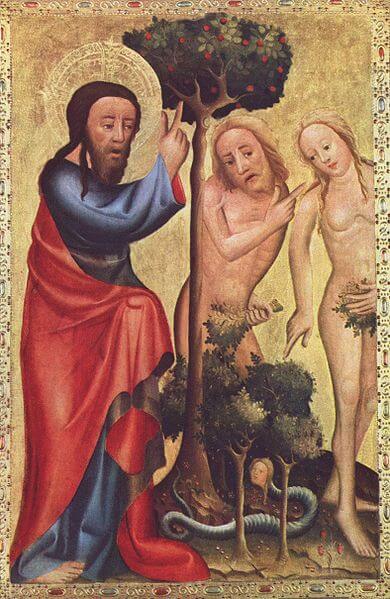 Depiction of Adam and Eve by Master Bertram (1383)
Categories
Ace Attorney characters, American Horror Story characters, angels, ballet, bass guitarists, Beetlejuice characters, Bewitched characters, biblical patriarchs, body parts, cabaret singers, child actors, colors, David Mitchell characters, Desperate Housewives characters, Detroit Become Human characters, Dharma and Greg characters, Doctor Who companions, DrakenNieR characters, Dynasty characters, earth, Fairly Oddparents characters, Family Guy characters, Family Ties characters, figure skaters, first humans, Granblue Fantasy characters, Grand Theft Auto Vice City characters, Hawaii Five-0 characters, Hazbin Hotel and Helluva Boss characters, Hebrew Bible figures, horror, House of Cards US characters, HSN hosts, Jackson Browne lyrics, Jane the Virgin characters, Leo Tolstoy characters, Liechtenstein princely family, love island Australia, love island Czechoslovakia, love island Poland, love island Quebec, love island UK, Mahoutsukai no Yome characters, Marvel characters, Miraculous Ladybug characters, Mom characters, Neon Genesis Evangelion characters, never out of the US top 1000, Nintendo characters, paintings, Phantasy Star characters, play titles, Power Rangers characters, red, Rick and Morty characters, RWBY characters, Sex Education characters, Shakespearean characters, Shining characters, Silent Hill characters, Sims 3 characters, Star Wars actors, Supernatural characters, Superstore characters, teen idols, The Golden Girls characters, The Good Witch characters, The Marvelous Mrs. Maisel characters, The West Wing characters, The White Lotus characters, top 10 in Azerbaijan, top 10 in Belgium, top 10 in Canada, top 10 in France, top 10 in Ireland, top 10 in Malaysia, top 10 in Northern Ireland, top 10 in Poland, top 10 in the Czech Republic, top 10 in the Maldives, Trauma Center characters, TV show titles, Weird Al Yankovic, Will and Grace characters, William Faulkner characters, Yakusoku no Neverland characters, Yellowjackets characters, YouTubers

